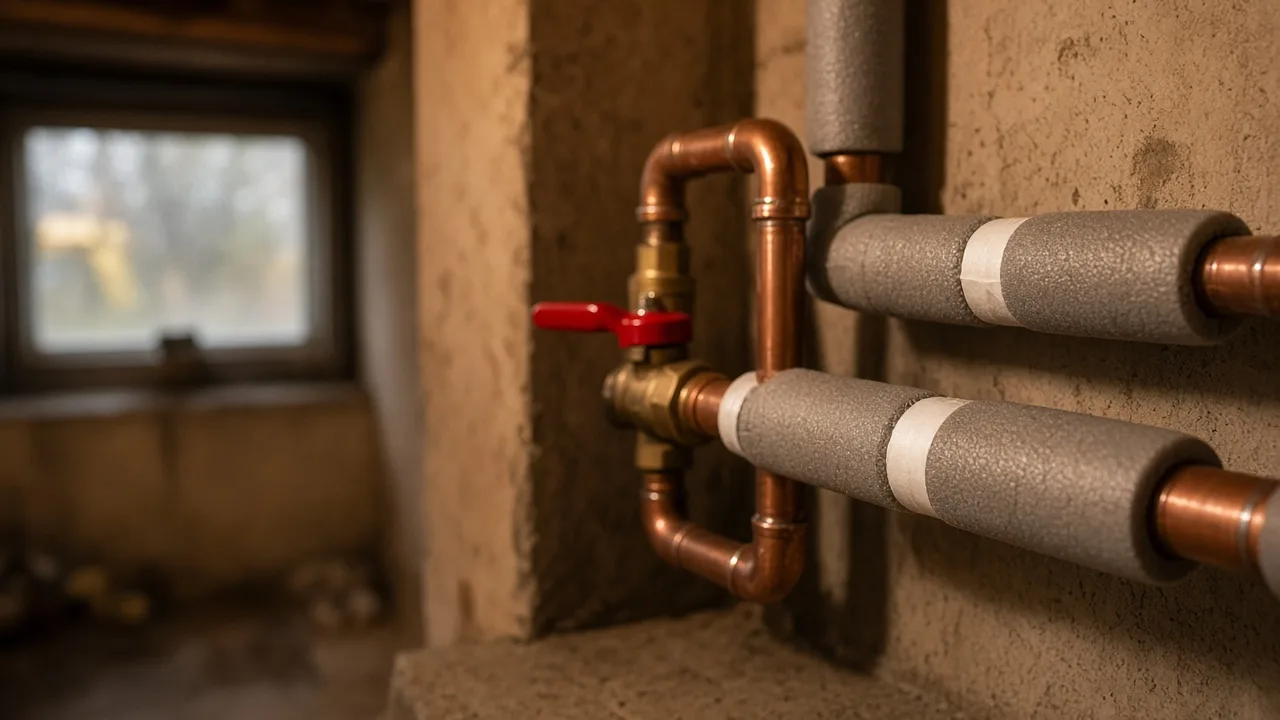
Every Delran winter brings the same phone call, and it arrives earlier than most people expect. Pipes in unheated basements, crawl spaces, and exterior walls freeze when the outside air holds near 20 degrees Fahrenheit for several hours, and one cracked line can pour hundreds of gallons into a finished basement. This guide covers which pipes in your home are at risk, what to do before the first hard freeze, how to handle a line that has already frozen, and what a burst really costs. It builds on the winter home maintenance guide and the fall home maintenance checklist, and most of it takes one afternoon.
Why Do Pipes Freeze in Delran Homes?
South Jersey winters are a cycle of freeze, thaw, refreeze, and the occasional storm that drops a foot of snow overnight. Water expands by roughly 9 percent when it turns to ice, and that expansion is what breaks the pipe: the ice itself rarely splits the metal, the trapped water behind it under pressure does. In a house, the coldest spots are the ones nobody heats, and Delran's housing stock has plenty of them. Ranch homes with basement utility rooms, two-story colonials with garage runs, and older houses where a previous owner ran plumbing along an outside wall all share the same vulnerability.
The good news is that the failure is almost always preventable, and the prevention is cheap. A roll of foam pipe insulation costs a few dollars per six-foot section, and the drips, drafts, and thermostat habits behind most frozen pipes take an hour to fix. What costs real money is the repair. The Insurance Information Institute puts the average homeowners water damage and freezing claim at roughly $14,000, and freeze-related pipe bursts account for about 18 percent of all water damage claims nationwide.
At What Temperature Do Pipes Actually Freeze?
Water in an unheated pipe can begin freezing at 32 degrees, but home pipes rarely fail that high because the house itself radiates some warmth. The number to watch is 20 degrees. Field tests by the University of Illinois Building Research Council found that uninsulated, exposed pipes can freeze in as little as three hours once the temperature holds at 20 degrees, while insulated pipes survive roughly twice that long. That is why a single bitter night rarely causes problems, and two or three nights in a row at 20 degrees is when the calls start.
In Delran, the first hard freeze usually lands between late October and mid-November, which means the risk window is open right now. Watch the forecast for overnight lows in the low 20s or teens for consecutive nights, and treat the first one as the signal to finish the checklist below. Homes in newer sections like Chester Woods and Foxtail Creek tend to have better-insulated basements and newer plumbing, while older homes in areas like Bridgeboro and the older streets off Route 130 are exactly the places where exposed runs and unheated crawl spaces show up.
Which Pipes in Your House Are Most at Risk?
The pipes that freeze are the pipes that live in cold spaces: unheated basements, crawl spaces, garages, and exterior walls. Start by walking your house and finding every line that runs through one of them. Outdoor spigots with garden hoses still attached are the most common culprit in Delran, because a hose left connected lets a freeze travel back into the house line. Next are the short runs under sinks on exterior walls, the laundry room lines against an outside wall, and any plumbing in a basement corner near a drafty window well.
Find your main water shutoff valve before you need it, usually where the line enters the house near the water meter in the basement or utility room, and make sure every adult in the house knows where it is. New Jersey American Water is the supplier for most of Delran, and the Delran utilities guide has the account and emergency contact details if you need them. A labeled shutoff valve turns an emergency into a two-minute job.
What Should You Do Before the First Hard Freeze?
Take one Saturday and run through the checklist. Disconnect and drain every garden hose, then shut off and drain exterior spigots where your setup allows. Insulate exposed pipes in crawl spaces and unheated basements with foam pipe sleeves, and fasten them securely so they stay in place all winter. Seal obvious drafts around windows, doors, and the spots where pipes enter the house, because cold air follows the same paths water does. If water lines run through your garage, keep the garage doors closed as much as possible during cold snaps.
For the worst spots, the runs in uninsulated crawl spaces or along outside walls, consider UL-listed heat tape or a heat cable with a thermostat. It is a modest DIY job for anyone comfortable with a receptacle and a plug, and it keeps a specific pipe warm automatically. If the basement has been wet or the crawl space is tight, the water damage prevention guide covers the moisture side of the same problem. And once the list is done, save a plumber's number: the Delran contractor recommendations page has vetted local names for the day you need one.
Should You Let Faucets Drip During a Cold Snap?
Yes, and the American Red Cross recommends exactly when. During very cold weather, let cold water drip from faucets served by exposed pipes, drip the faucet farthest from your main shutoff valve, and run both the hot and cold taps at a trickle. A steady stream, even a pencil-thin one, keeps water moving through the line, and moving water is dramatically harder to freeze than standing water. The drip costs a few pennies a night; a burst line costs thousands.
Open kitchen and bathroom cabinet doors on exterior walls during extreme cold so warm house air reaches the pipes underneath. Move caustic cleaners and anything a child could reach up and out of reach first, and pull the buckets of cleaning supplies away from plumbing that might drip. If a room is unused, like a guest bath, run a little water through it every few days during a cold spell, because unused lines are the ones that freeze quietly.
What Should Your Thermostat Be Set To in Winter?
The Red Cross guidance is simple: during cold weather, keep the thermostat at the same temperature day and night, and don't drop it at bedtime to save fuel. The heating bill for holding 68 degrees overnight is small next to a water damage claim. If you leave the house for more than a day in freezing weather, leave the heat on at no lower than 55 degrees, which keeps interior wall cavities warm enough that pipes next to them won't freeze.
If you travel for the holidays, do not let the house go cold, and consider a smart thermostat with vacation scheduling so you can check the temperature from your phone and catch a heating failure while it is still fixable. Set the low alert a few degrees above the 55-degree floor. The energy efficiency guide has the insulation and air-sealing work that keeps the whole house warmer and December bills lower, which is the same work that protects pipes.
What Do You Do If a Pipe Is Already Frozen?
The first step is figuring out whether the pipe has burst. Turn on a faucet: if water comes out weak or not at all, the line upstream is frozen. Look for frost on exposed pipes, and check for cracks, bulges, or water where it should not be, especially near joints and at the lowest point of the run. If the wall looks wet, the ceiling has a stain, or you can hear water running when every faucet is off, shut off the main valve and call a plumber immediately.
If the pipe is intact, leave the offending faucet open so water and steam can escape as the ice melts, then start thawing. Warm the pipe from the faucet end back toward the frozen section, never the other way, so the melt has somewhere to go. Keep checking until the flow returns to normal, and once it does, check all the other faucets in the house for weak flow, because a second line may have frozen too.
How Do You Thaw a Frozen Pipe Safely?
Slow heat wins. The Red Cross recommends a hairdryer on its lowest setting, a portable space heater kept well clear of flammable material, or towels soaked in hot water, applied gradually. Never use a blowtorch, kerosene or propane heater, charcoal stove, or any open flame, and skip the high heat gun too, because plumbing near wood framing is a fire hazard waiting for a careless minute. Heat tape should be applied before the pipe freezes, not used as a live thawing tool on a wet line.
Work in short passes and keep an eye on the wall and ceiling around the pipe, because the first sign of a hidden burst can be a spreading stain. Keep the faucet open the entire time, and if water starts flowing again, let it run for a minute to clear the line fully. If you cannot reach the frozen section, the pipe runs through an exterior wall and you cannot get behind it, or your thawing attempts are not working, it is time for a professional plumber rather than more heat.
What Does a Burst Pipe Cost, and Does Insurance Cover It?
The damage numbers concentrate the mind. The Insurance Information Institute reports that water damage and freezing is one of the most common homeowners claims, with about 1 in 60 insured homes filing one each year, and the average payout runs roughly $14,000. A burst pipe in a single room typically costs $1,000 to $8,000 to restore, and a burst that runs while nobody is home can climb far beyond that once drywall, flooring, and cabinetry come out.
Most standard homeowners policies cover sudden, accidental water damage from a burst pipe, which is the good news. The fine print matters in two places: damage from neglect or long-term leaks is often excluded, and many policies limit or deny coverage when a house was left unheated for an extended stretch or sat vacant, which is exactly the scenario where a thermostat drops below 55 degrees. Keep the heat on while you travel and document your winterization, and remember that flood damage from rising water is a separate policy entirely, a real consideration for Delran homes near the Rancocas Creek and the Delaware River covered in the flood insurance guide.
When Should You Call a Plumber Instead of Handling It Yourself?
Call early in a few clear situations: you cannot find or reach the main shutoff valve, water is spraying or pooling, a ceiling or wall is already wet, you cannot locate the frozen section, or your own thawing has not restored flow within an hour or so. A plumber can also add shutoff valves to exterior spigots, install heat tape on the worst runs, and repipe an exposed line that freezes every year. For the rest, a roll of foam insulation, a Friday-afternoon check of the forecast, and the Red Cross drip are the cheapest insurance you will ever buy.
If you are shopping for a house in Delran and want to know how its basement, garage, and exterior walls will treat you in January, that is a question I answer all the time, and the housing options guide breaks down the differences between the town's home styles. The Homeowner Resources hub ties the whole seasonal maintenance rhythm together, and the winter home maintenance guide picks up where frozen pipes end, covering snow, ice, and the emergency kit.
Frequently Asked Questions About Frozen Pipes in Delran
At what temperature do pipes freeze in a Delran home?
Water in pipes can start freezing at 32 degrees, but home pipes most commonly freeze when the outside temperature holds at about 20 degrees or below for several hours. University of Illinois field tests found uninsulated exposed pipes can freeze in as little as three hours at 20 degrees. Delran's first hard freeze usually lands between late October and mid-November, so the window is open now.
Which pipes are most likely to freeze?
Pipes in unheated basements, crawl spaces, garages, and exterior walls freeze first, along with outdoor spigots that still have hoses attached. Disconnect hoses, shut off exterior spigots where the setup allows, and know where your main shutoff valve is before you need it.
Should I let my faucets drip during a cold snap?
Yes. The American Red Cross recommends letting cold water drip from faucets served by exposed pipes during very cold weather. Drip the faucet farthest from the main shutoff, run both hot and cold at a trickle, and open cabinet doors so warm air reaches the pipes. The cost of the drip is pennies next to a burst pipe repair.
What should I set my thermostat to in winter?
Keep the thermostat at the same temperature day and night during sustained cold, per the American Red Cross, and if you leave the house in freezing weather, leave the heat at no lower than 55 degrees. The extra heating cost is small next to a water damage claim averaging roughly $14,000.
What do I do if a pipe is already frozen?
Check for cracks, bulges, or water where it should not be, and shut off the main valve if the pipe has burst. If it is intact, leave the faucet open, then warm the pipe from the faucet end back with a hairdryer on low, a space heater kept clear, or warm towels. Call a plumber if you cannot reach the pipe or thawing fails.
Can I thaw a frozen pipe with a blowtorch or heat gun?
No. The American Red Cross warns against blowtorches, kerosene or propane heaters, charcoal stoves, and any open flame, and a high heat gun is too aggressive near wood framing. Use slow heat: a hairdryer on low or warm towels, applied from the faucet end back.
Will homeowners insurance cover a burst pipe in Delran?
Most standard policies cover sudden, accidental water damage from a burst pipe, but many limit coverage when heat was off or the house was vacant, so keep the thermostat above 55 degrees when away. Flood damage from rising water is a separate policy, which matters near the Rancocas Creek and Delaware River.
Ten dollars of foam insulation and one Saturday morning beat a $14,000 insurance claim every time. Disconnect the hoses, find the shutoff valve, insulate the exposed runs, seal the drafts, keep the heat up when you travel, and drip the farthest faucet when the forecast holds in the 20s. The fall maintenance checklist gets the rest of the house ready, the contractor page has plumbers for the jobs you should not DIY, and I am always glad to help a neighbor sort out which is which. Winter plumbing questions land in the Delran FAQ, and the living in Delran guide shows the town behind every cold-weather checklist. Have questions about Delran? Contact Bob Millaway at 856.426.1522.
Have Questions About Delran?
Contact Bob Millaway at 856.426.1522. As an Epique Realty AI Certified Agent with over 728 homes sold and $115M+ in career sales, I have spent 20+ years helping Burlington County families get more out of their homes and neighborhoods, and I am always happy to share what I know.